
How to Choose Exterior Cladding for Your Home and Climate
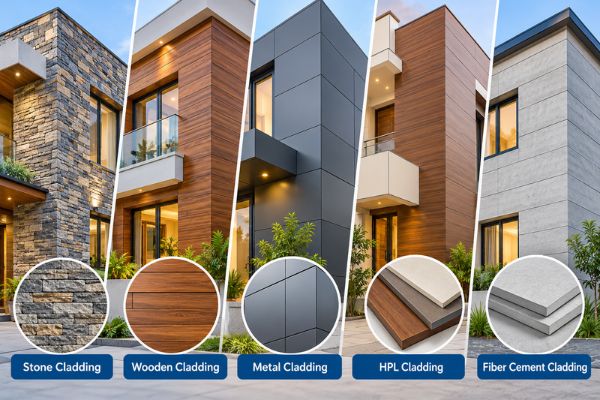
The right exterior wall cladding depends on your home’s design, local weather, wall condition and maintenance budget. Exterior HPL, natural stone, tiles, ACP and fibre cement offer different appearances and installation needs. Compare the complete wall system and installed cost before choosing a material.
A sample can help you select a colour, but it cannot explain how the finished elevation will manage rainwater or accommodate movement. Those details depend on the product specification and installation design.
For Indian homes, a useful comparison starts with practical questions: Where will the cladding go, what exposure will it face, and how will you maintain it?
Compare Common Exterior Wall Cladding Materials
| Material | Appearance and Design Options | Main Buying Consideration |
|---|---|---|
| Exterior Compact HPL | Woodgrain, solid colours and textured panels | Exterior grade, fixing system and joint layout |
| Natural Stone | Natural texture and variation | Weight, support and stone specific maintenance |
| Exterior Tiles | Stone effects, patterns and other finishes | Exterior suitability and approved fixing method |
| ACP | Metallic finishes and fabricated shapes | Core type, coating and facade system |
| Fibre Cement | Panel layouts and painted or factory finishes | Product grade, edge details and finishing needs |
No material is the best choice for every home. Use this comparison to shortlist options, then review the exact products with your architect or installer.
When Should You Consider Exterior HPL Panels
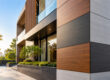
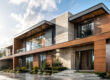
Exterior compact HPL can suit homeowners who want a wood inspired or textured elevation without using exposed natural timber. Panels can form feature walls, entrance sections and other designed facade areas.
Confirm that the selected panel is intended for exterior use. Interior decorative laminate bonded to a board should not be treated as an equivalent replacement.
Ask about surface performance, panel thickness, fixing guidance and warranty terms. Plan joints and sheet dimensions early so the design allows suitable movement and limits unnecessary cutting waste.
Is Natural Stone Suitable for Every House
Natural stone offers texture and variation that can give an elevation a distinctive appearance. However, stones differ in porosity, strength and response to outdoor exposure.
Stone weight affects support and fixing requirements. The installer must assess the wall and choose a suitable installation method for the stone size and location.
Request guidance on cleaning and sealing for the selected stone. Avoid assuming that every stone needs the same treatment or remains unchanged under sunlight, rain and pollution.
View several pieces before ordering because natural variation can affect the finished wall.
What Should You Check Before Choosing Exterior Tiles
Tiles can provide decorative options for entrance walls, boundary walls and selected elevation areas. Choose products specifically suitable for the intended exterior application.
Tile size, weight, substrate condition and fixing method all influence installation. A product suitable for a sheltered wall may need further assessment before use on a tall, exposed elevation.
Ask the installer about adhesive compatibility, joints, water management and preparation of the existing wall. The tile surface alone does not establish the durability of the completed installation.
When Do ACP and Fibre Cement Make Sense
ACP may suit elevations with metallic finishes, folded details or fabricated panel forms. Buyers should confirm the core type, aluminium skin thickness, coating and supporting system.
Fibre cement can suit designs using defined panel layouts or selected painted finishes. Check whether the product arrives finished or requires coating on site, and follow the specified edge and fixing details.
For both materials, request documents for the exact product. A general material name does not confirm exterior performance, fire classification or maintenance requirements.
How Does Indian Weather Affect Your Choice
Assess the conditions at your property rather than selecting cladding through a city name alone. Direct sunlight, driving rain, nearby pollution and coastal exposure can create different requirements.
A west facing wall may receive strong afternoon sunlight, while an entrance under a deep roof may remain sheltered. These areas do not necessarily need identical specifications.
For homes in Ahmedabad and Gujarat, discuss seasonal rain and sun exposure with the supplier. Ask how colour retention, fixings and joints are addressed in the proposed installation.
Compare Installed Cost and Future Maintenance
The sheet or tile price is only part of the budget. Request a quotation covering:
- Wall preparation and repairs.
- Material quantity and cutting waste.
- Supports, adhesives or mechanical fixings.
- Corners, joints and window details.
- Labour and access equipment.
- Transport and applicable taxes.
Also consider cleaning access and replacement. A finish requiring frequent attention may be inconvenient on an upper floor.
Ask which components can be replaced individually and retain approved product codes for future maintenance.
What Should You Confirm Before Ordering
Check the wall condition, approved layout, product grade and installer’s scope before paying for materials. Cladding should not be used to hide an unresolved leakage problem.
The design should address water drainage and ventilation where required. Fire performance must also be reviewed for the product and complete wall assembly against applicable project requirements.
HPL Decor in Ahmedabad can discuss exterior compact laminate options with buyers preparing home elevation projects. Share drawings, preferred finishes, quantities and delivery details to request a relevant quotation.
Conclusion
Choose exterior wall cladding through appearance, site exposure and installation requirements together. Compare specific products and complete costs, then approve samples and drawings before ordering. This approach helps create an elevation that is practical to install, inspect and maintain.
Frequently Asked Questions
There is no universal winner. Select a product suited to the wall design, weather exposure, support requirements and maintenance budget.
Yes, subject to the approved design and installation guidance. Share the proposed area and junction details with the supplier and installer.
Compare current installed quotations for your project. Material price alone excludes wall preparation, supports, accessories, labour and cutting waste.
Do not assume it will. Identify and repair the leakage source, then design the cladding with appropriate water management details.
Yes. Review colour and texture outdoors, and check how the sample looks beside windows, paint and other elevation finishes.
It may be possible after assessing the wall, fixing suitability and structural needs. Request a site review before approving the installation.
Provide elevation drawings, dimensions, location, preferred material and finish. Ask for separate details of supply, accessories, installation and delivery.