How to Choose Between HPL and ACP for Your Building Exterior
Exterior HPL can suit projects seeking textured or woodgrain surfaces, while ACP can suit metallic finishes and fabricated shapes. Neither material is the better choice for every building. Compare the specific product grade, fire performance, fixing system, maintenance needs and installed cost before selecting exterior wall cladding.
A facade must do more than look attractive in a catalogue. Sunlight, rain, wind and installation quality affect how the finished surface performs.
This guide compares HPL and ACP sheets so homeowners, architects and project buyers can prepare a clearer specification.
What Is the Difference Between HPL and ACP Sheets
HPL stands for high pressure laminate. Exterior compact HPL panels are manufactured from layers of fibre based material and thermosetting resins, with a decorative surface designed for the specified outdoor application.
ACP stands for aluminium composite panel. It consists of two aluminium skins bonded to a core. Core composition, aluminium thickness and surface coating vary between products.
Interior decorative HPL should not be substituted for exterior compact panels. Similarly, an ACP product intended for signage should not automatically be accepted for building cladding.
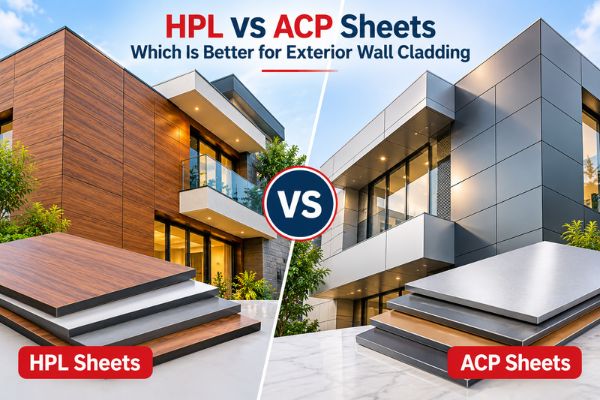
HPL vs ACP Exterior Cladding Comparison
| Buying Consideration | Exterior HPL | ACP |
|---|---|---|
| Surface Appearance | Woodgrain, solid colours and textured options | Metallic, solid colours and other decorative finishes |
| Fabrication | Commonly cut and drilled into panel layouts | Can be routed and folded into suitable fabricated forms |
| Product Specification | Grade, thickness and exterior surface performance | Core type, skin thickness and coating specification |
| Fire Assessment | Exact panel grade and complete facade assembly | Exact core, panel grade and complete facade assembly |
| Installation | Approved supports, fixings and movement allowances | Approved framing, fabrication and fixing details |
| Budget Comparison | Include panels, cutting, supports and installation | Include panels, fabrication, supports and installation |
Finish choices overlap between the materials. Compare actual samples rather than assuming only one material can achieve your preferred appearance.
Which Material Suits Your Facade Design
Exterior HPL is worth considering when the design calls for a textured surface or a wood inspired appearance. Panel layouts can create clear joints and defined sections across the elevation.
ACP may suit designs requiring folded edges, cassette panels or curved details where the selected product permits fabrication.
The final choice should reflect the drawings. Corners, openings, panel dimensions and joint positions influence material use and installation work.
View samples outdoors and from the expected viewing distance. A finish that looks appealing close up may appear different across a large facade.
How Should You Compare Weather Performance
For either material, request documentation covering the intended exterior use. Check weathering performance, colour retention and warranty conditions for the exact finish.
In Ahmedabad and other parts of Gujarat, buyers should discuss strong sunlight, seasonal rain and site specific exposure with the supplier. Coastal or industrial locations may need additional assessment.
Cladding alone does not make a wall waterproof. The facade design must address joints, flashings, drainage and ventilation where required.
Ask how the proposed system manages water behind the panels, especially around windows and roof connections.
What Should Buyers Check About Fire Performance
Fire performance requires a product and system specific review. HPL contains organic material, and flame retardant grades must be assessed against the project requirements.
ACP core types vary. Polyethylene cores, mineral filled fire retardant cores and higher performance mineral core products should not be treated as equivalent.
A panel classification alone does not establish the performance of the entire facade. Insulation, cavities, supports, barriers and fixing arrangements also influence fire behaviour.
Ask the project architect or qualified facade professional to review the applicable requirements and supporting documents. Avoid selecting either material through a general fireproof claim.
Is HPL or ACP More Affordable
There is no universal price winner. Product grade, thickness, finish, quantity and fabrication all affect the quotation.
Compare installed cost using the same elevation drawings and scope. Include:
- Panel supply and cutting waste.
- Supporting structure and fixings.
- Fabrication and edge details.
- Transport and unloading.
- Installation labour and access equipment.
- Applicable taxes.
An inexpensive panel can become a costly option if its dimensions create excessive waste or its design requires extensive fabrication.
Ask suppliers to separate material cost from installation charges.
How Do Maintenance and Replacement Compare
Both materials need cleaning according to the manufacturer’s instructions. Dirt exposure, finish and access conditions influence the maintenance plan.
Ask about suitable cleaners and methods before specifying the surface. Abrasive cleaning can damage finishes, while unsuitable chemicals may affect appearance.
Also consider panel replacement. A damaged section should be accessible without unnecessary disturbance to nearby panels.
Record finish codes and batch details for future orders. Replacement panels may show colour differences because of ageing or production variations.
What Should You Send Before Requesting a Quotation
Share elevation drawings, building height, project location, preferred finish, quantity and performance requirements.
For HPL enquiries, buyers can contact HPL Decor in Ahmedabad to discuss exterior compact laminate options. Request samples, technical documents and a clearly defined quotation.
For either material, confirm who is responsible for facade design and installation. Agree on the product specification before approving bulk supply.
Conclusion
Choose exterior HPL or ACP through the requirements of your building. Appearance helps shortlist the options, but documented performance, installation design and complete project cost should guide approval. Comparing specific products gives you a more useful answer than comparing material names alone.
Frequently Asked Questions
Both can suit exterior projects when correctly specified. Compare the desired finish, fabrication needs, product documentation and complete facade design before deciding.
No. Prices vary by grade, dimensions, finish and installation scope. Request comparable quotations based on the same drawings and requirements.
Do not assume they are suitable. Request an exterior grade product with documentation covering the intended exposure and application.
Ask for the core type, aluminium skin thickness, coating, panel dimensions, fire documentation and installation guidance for the selected product.
Ask about sample availability in the shortlisted finishes. Review appearance outdoors and confirm the approved finish code before ordering.
Some cover supply only. Confirm whether supports, fixings, fabrication, transport, access equipment and installation are included.
Confirm the approved grade, drawings, finish, quantity, technical documents, warranty terms and delivery schedule. Have the proposed facade system reviewed before purchase.